


Navigate the fine line — explore the pros and cons of social media use at work and learn how to build a smart, balanced policy that boosts connection without sacrificing productivity.
1. Allowing social media usage at work can boost employee morale, enhance employer branding, reduce distractions, strengthen workplace relationships, and promote professional networking.
2. However, it can also lead to employee misuse, increase the risk of confidential data leakage, and heighten the possibility of virus or malware attacks.
3. Organizations must strike a balance by implementing a flexible yet comprehensive social media policy to ensure responsible use that enhances employee motivation and performance.
There is a raging debate in the corporate world about whether allowing employees to use social media at work can be beneficial or damaging to an organization.
| Aspect | Key Insights | Best Practices | Policy Guidelines | Business Impact |
|---|---|---|---|---|
| Pros – Employee Engagement & Morale | Social media access boosts morale and makes employees feel trusted and valued | Allow controlled access during work hours; encourage healthy breaks | Permit limited personal use during breaks; define acceptable usage windows | Higher engagement, improved satisfaction, and better productivity |
| Pros – Employer Branding & Advocacy | Employees sharing positive content enhances brand visibility and employer branding | Encourage employees to share company achievements and culture | Define guidelines for brand representation and content sharing | Stronger employer brand, improved talent attraction |
| Pros – Workplace Relationships & Networking | Social platforms foster informal communication and professional networking | Use internal/social tools to promote collaboration and connection | Encourage respectful interaction and professional conduct online | Better collaboration, stronger workplace relationships |
| Pros – Reduced Distraction (Paradoxically) | Restricting access can increase distraction; controlled access improves focus | Avoid complete bans; allow flexible usage with boundaries | Allow monitored access instead of blocking platforms entirely | Improved focus, reduced frustration, better productivity balance |
| Cons – Productivity Loss | Excessive use can distract employees and reduce efficiency | Set clear usage limits and monitor productivity outcomes | Define acceptable time limits and consequences for misuse | Maintains productivity while allowing flexibility |
| Cons – Data Security & Confidentiality Risks | Social media can expose sensitive company data or enable cyber threats | Implement cybersecurity protocols and employee awareness programs | Prohibit sharing confidential information; enforce data protection rules | Reduced risk of data breaches and compliance issues |
| Cons – Misuse & Addiction | Employees may overuse social media for non-work activities | Promote responsible usage through training and awareness | Define misuse scenarios and disciplinary actions | Prevents productivity loss and ensures accountability |
| Cons – Legal & Reputation Risks | Inappropriate posts or behavior can harm the company’s reputation | Establish clear communication and conduct guidelines | Define acceptable online behavior and escalation protocols | Protects brand reputation and reduces legal exposure |
| Best Practice – Define a Clear Social Media Policy | Balanced policies are critical to leverage benefits while minimizing risks | Create a flexible yet comprehensive policy aligned with business goals | Include scope, definitions, do’s and don’ts, and escalation paths | Ensures clarity, consistency, and compliance |
| Best Practice – Educate & Train Employees | Awareness reduces misuse and security risks | Conduct regular training on responsible social media usage | Include mandatory onboarding training and periodic refreshers | Improves compliance and reduces risk exposure |
| Best Practice – Monitor & Evolve Policy | Social media trends and risks evolve constantly | Review and update policies regularly based on usage patterns | Include review cycles and feedback mechanisms | Keeps policy relevant and effective over time |
| Best Practice – Align with Business Objectives | Social media should support communication, branding, and engagement goals | Integrate social media into internal communication and recognition strategies | Inappropriate posts or behavior can harm the company’s reputation | Drives ROI, improves engagement, and supports business growth |
Over the past decade, social media has become an integral part of the everyday life of most people.

The rise of smartphones has further popularized social media by providing instant access.
From being a novelty to becoming an addiction for countless people, the growth of social media over the past several years has been truly phenomenal.
More than 70% of people with internet access today use at least one of the eight popular social media platforms regularly.
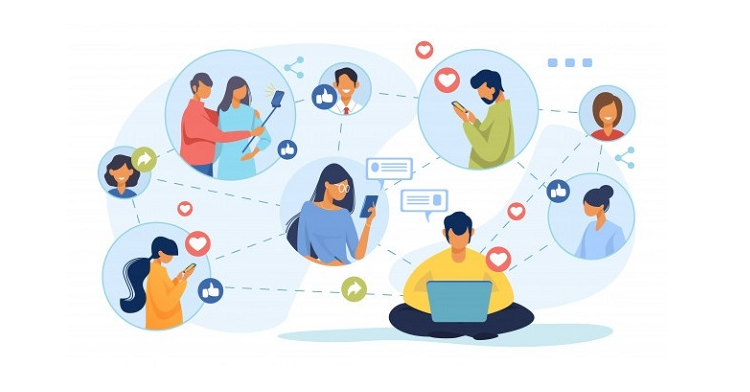
The desire to stay constantly connected and up to date often leads employees to use social media during work hours.
However, many organizations consider the use of social media at work as just an unproductive activity.
While social media use at work can drain productivity, the appropriate use of social networking for marketing and other activities can also be immensely beneficial for organizations.
Hence, it is unsurprising that workplace or social policies cross a fine line.
There are strong opinions both in favor of and opposing the use of this technology in the workplace.
Organizations must consider the pros and cons before devising an effective social media policy.

Like any other technology, social media has its own advantages and disadvantages.
Having a clear understanding of both these aspects is essential to assess its impact on employee productivity and performance.
Here are the pros and cons that can help organizations strike a perfect balance between social media use and employee performance.

Allowing employees access to social media sites boosts their morale and engagement level.
This is because the freedom to check their social media accounts even while working enhances the happiness of employees.
Consequently, they tend to be more productive, friendly, and loyal, which is a win-win situation for any organization.

When employees are allowed to use social media at work, the likelihood that they will post positive, engaging content about the organization increases significantly.
This helps to create a positive brand image for the organization and improve its employer branding among prospective candidates.

It is human nature to be more focused and constantly curious about something that people are preventing them from doing.
This applies to social media usage as well and employees are likely to be more distracted by their inability to access their profiles than when they are allowed to do so.

Social media sites provide a platform for people to communicate informally.
This can help to strengthen workplace relationships by providing co-workers and managers with a platform to interact with the employees in a more open and frank manner.
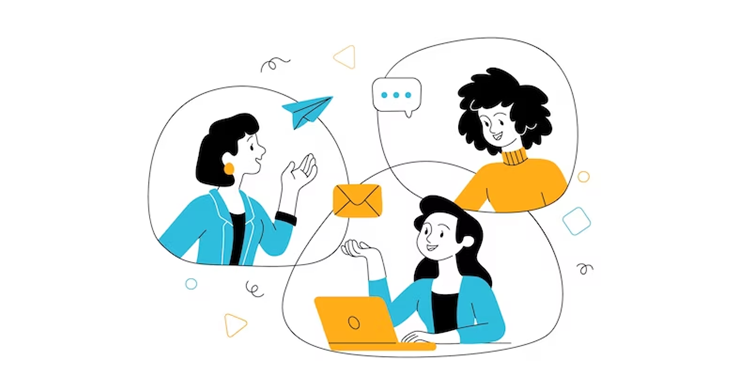
Employees use social media platforms, such as LinkedIn, to establish professional connections and expand their networks.
This can prove extremely beneficial for businesses as the employees can leverage these social media connections to enhance their workplace performance and productivity.
Additionally, they can use the information gained through these networks to promote their business and engage in other value-added activities.

It is well acknowledged that social media use has become an addiction for many people today.
For employees who are addicted to this habit, nothing can be more beneficial than the freedom to access their social media profiles at work.
Such employees are likely to misuse this freedom and waste their valuable time simply viewing their profile and updating their status.

Social media usage requires internet access and if that is not secured, it can provide online criminals with easy access to vital and confidential data of the company.
Additionally, it offers business competitors numerous opportunities to acquire essential business strategies and gain a competitive edge.
The freedom to use social media also allows employees to download malicious content from these platforms.
This increases the possibility of a virus or malware attack on the laptops and computers as well as the corporate systems through the internal corporate network.
It can result in significant financial loss and damage to the organization’s reputation.
Social media, when used responsibly can boost employee motivation and performance significantly. This can be ensured only through a flexible but comprehensive social media policy outlining appropriate and inappropriate behavior concerning social media usage at work.

Lead author: Sagar Chaudhuri, the Co-Founder and CEO of HiFives. He is an HR Tech Evangelist with over 25 years of experience in both corporate and entrepreneurial settings. Previously, Sagar has held leadership roles with companies such as Genpact, Infosys, and ICICI Bank. He has an engineering degree from IIT Kharagpur and an MBA from IIM Lucknow. Connect on LinkedIn
To stay updated on the latest HiFives blogs, follow us on Twitter (@MyHiFives)\