

How organizations can accelerate future-readiness by embedding recognition into upskilling and reskilling pathways.
1. Recognition Enhances Learning Impact
Traditional learning and development (L&D) programs often lack engagement and personalization. Recognition serves as a powerful motivator, reinforcing desired learning behaviors and increasing skill retention.
2. Behavioral Psychology Supports Recognition
Positive reinforcement—like timely, specific praise—boosts intrinsic motivation, making employees more likely to apply and retain new skills.
3. Best Practices for Recognition-Driven Learning
Key strategies include recognizing critical skills, fostering peer-to-peer appreciation, leveraging digital platforms, and aligning recognition with career growth to cultivate a sustainable learning culture.
4. Tangible Business Outcomes
Recognition reduces voluntary attrition, increases L&D participation, encourages the practical application of skills, and fosters a future-ready workforce.
In an era marked by rapid digital transformation, upskilling and reskilling are crucial for achieving sustained organizational success. But standard L&D initiatives often fall short. The missing ingredient? Employee recognition—a powerful driver that elevates engagement, learning, and performance.
| Key Strategies | Best Practices for Implementation | Impact on Learning |
|---|---|---|
| Link Recognition to Learning & Skill Development | Recognize employees for completing courses, certifications, and skill milestones; integrate recognition into L&D programs | Increases participation in learning initiatives and motivates continuous skill development |
| Tie Recognition to Career Growth & Progression | Connect skill acquisition with promotions, internal mobility, and career pathways | Enhances retention and motivation by showing clear growth opportunities |
| Reward Application of New Skills at Work | Recognize employees when they apply newly learned skills in real projects or business outcomes | Improves skill transfer, productivity, and real-world impact of training investments |
| Build a Culture of Continuous Learning through Recognition | Celebrate learning behaviors publicly; promote knowledge sharing and peer recognition | Strengthens a learning culture, driving innovation and long-term capability building |
| Use Gamification and Social Recognition for Learning | Introduce leaderboards, badges, and social recognition feeds tied to learning achievements | Boosts engagement, participation, and healthy competition in L&D programs |
| Leverage Recognition Data for Skill Insights | Use recognition trends to identify emerging skills, top contributors, and capability gaps | Enables smarter workforce planning and targeted upskilling strategies |
| Encourage Manager-Led and Peer Recognition for Learning Efforts | Train managers to recognize learning efforts; enable peer-to-peer appreciation for skill-building behaviors | Drives inclusivity and frequency of recognition, increasing engagement and motivation |
| Align Recognition with Future-Ready Skills and Business Goals | Identify critical skill gaps and align recognition programs with strategic priorities | Improves organizational agility, competitiveness, and readiness for change |
| Make Recognition Timely and Continuous (Not Event-Based) | Recognize learning efforts in real time rather than only during annual reviews | Reinforces learning behaviors immediately, increasing their effectiveness and recall |
| Personalize Recognition for Learning Journeys | Tailor recognition based on individual goals, skill paths, and career aspirations | Enhances employee experience, satisfaction, and long-term engagement |
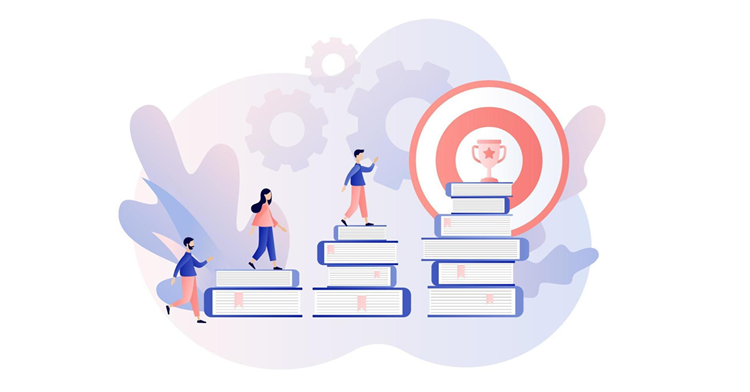
McKinsey: 87% of executives report challenges addressing skill gaps internally.
The World Bank estimates that 58% of the global workforce needs to acquire new skills to remain relevant.
World Economic Forum: 44% of core skills are likely to face disruption by 2027.
Gallup: 80% of professionals emphasize the rising importance of soft skills amid technological change
Upskilling isn’t just a strategy—it’s a competitive necessity. And recognition is what transforms intention into action.
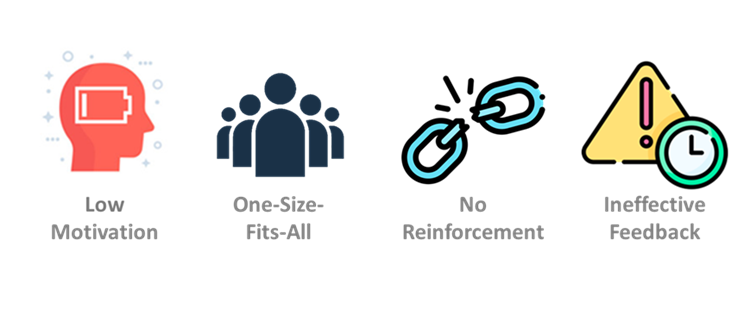
Perceived as checkbox exercises rather than impactful learning.
Ignore unique career paths and learning preferences.
New skills aren’t consistently applied, resulting in poor retention.
Leaves learners in the dark about real progress.
Recognition remedies all these issues by making learning timely, rewarding, and visible.

Fundamentally, rewarding employees is an effective way to reinforce desired behaviors and promote learning and development. Employees are more likely to repeat behaviors they are praised or appreciated for in the future, even without explicit instruction.
These behaviors may also include eagerness to acquire new skills or to apply newly acquired knowledge in their work.
Recognition thus acts as a positive reinforcement, which drives motivation for reskilling employees across the organization.
Behavioral psychology defines positive reinforcement as the immediate reward of a specific behavior to increase the likelihood that the subject will repeat it. In the workplace, L&D recognition programs serve as a tool for positive reinforcement.

Behavioral studies confirm that immediate, specific praise strengthens the repetition of behavior.
In L&D, when employees receive recognition for applying new skills or completing training, it boosts intrinsic motivation, leading to deeper learning and sustained habit formation.

Establishing the significance of a recognition-based learning culture in boosting upskilling and reskilling behaviors among employees is just the first step.
Here are the best practices for leveraging recognition effectively to support employees’ upskilling and reskilling efforts that organizations can implement:
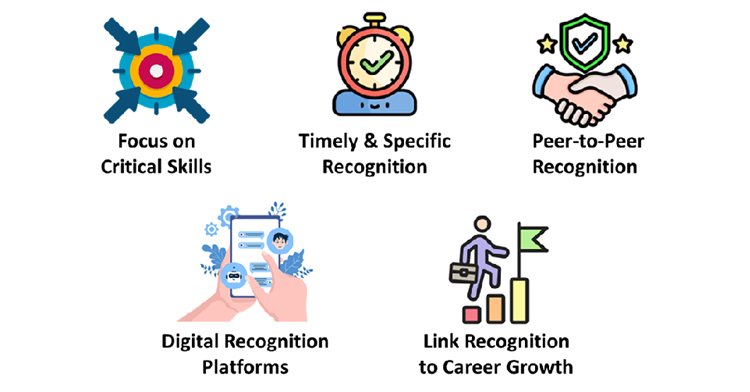
Organizations should prioritize recognizing employees whose learning & development activities are likely to prove most important for the organization. Offering recognition focused on particular learning areas, such as AI, leadership, or digital transformation, makes it more relevant and impactful.
This focused strategy encourages members of the workforce to acquire highly sought-after skills essential to the business’s expansion, while also aligning with their individual learning needs and organizational requirements.
When recognition occurs promptly and for a specific reason, its impact significantly increases. Highlighting the reason behind recognizing an employee, such as the successful implementation of a new technology or the mastery of an important skill, makes the process more meaningful.
L&D awards not only acknowledge the achievement of that employee but also reinforce the value of that behavior among other members of the workforce.
Peer-to-peer recognition is of utmost importance, as it reflects the appreciation and support coworkers have for one another’s achievements and behaviors. It is the most fundamental aspect of building a culture of learning within an organization and fostering cooperation and trust among employees.
Most importantly, it helps create internal role models who tend to encourage and motivate employees on their path to learning and development.
With most organizations today being digitally driven, using innovative recognition tools integrated with Microsoft Teams, Slack, Jira, and Learning Management Systems (LMSs) can make the process more effective and meaningful.
These platforms increase the impact of learning achievements by offering visible, real-time recognition that can be shared across departments or teams. The tools also facilitate gamified learning, which ensures better understanding and retention of skills.
Recognition helps establish a clear connection between learning new skills and employees’ career advancement. Linking employee recognition and upskilling is more likely to motivate them to participate in various learning initiatives.
It also empowers employees to see the actual results of their upskilling and reskilling efforts, encouraging them to work towards advancing their careers.
Recognition extends beyond merely encouraging learning; it also promotes upskilling and reskilling.
Moreover, recognition is known to have a significant impact on employee engagement and retention.
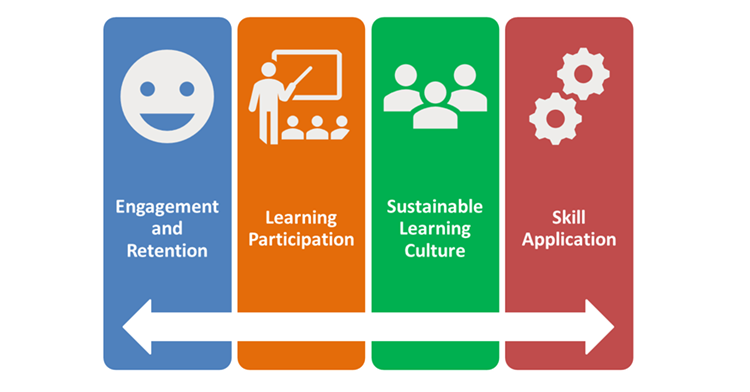
Companies with formal recognition programs experience 31% less voluntary turnover; learners who receive recognition are 2.7× more likely to stay.
L&D rewards elevate engagement, retention, and performance, especially with gamified, feedback-rich approaches
Recognition reinforces norms of continuous learning, thereby strengthening knowledge sharing and innovation.
Celebrating the use of new skills, such as automation deployment, increases adoption and facilitates their practical transfer.
Here is the 5-step framework:
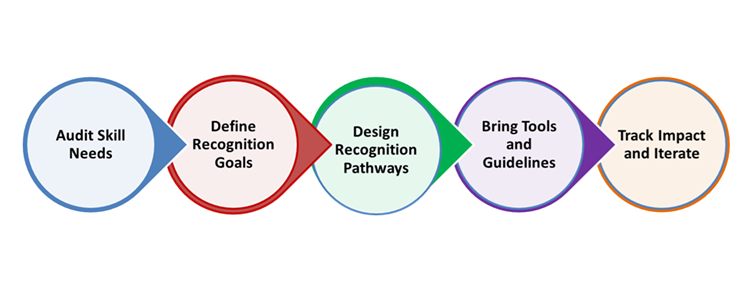
Collaborate across functions to identify priority and future-ready skills.
Be clear on which learning activities the organizations should recognize and why.
Map rewards across types: spot awards for project application, tokens for course completion, and public peer recognition.
Equip managers and peers with digital platforms, timely practices, and feedback loops to recognize effectively.
Monitor key metrics, including engagement rates, skill adoption, and turnover. Scale what works; refine what doesn’t.
Recognition isn’t a “nice-to-have” – it’s vital. It removes motivational barriers, makes learning stick, and fosters a vibrant, growth-oriented culture. By embedding recognition into upskilling and reskilling pathways, organizations can accelerate future-readiness, deepen talent engagement, and create a resilient workforce for the challenges ahead.

Lead author: Sagar Chaudhuri, the Co-Founder and CEO of HiFives. He is an HR Tech Evangelist with over 25 years of experience in both corporate and entrepreneurial settings. Previously, Sagar has held leadership roles at companies such as Genpact, Infosys, and ICICI Bank. He has an engineering degree from IIT Kharagpur and an MBA from IIM Lucknow. Connect on LinkedIn
To stay updated on the latest HiFives blogs, follow us on Twitter (@MyHiFives)