


Employee rewards & recognition are no longer “nice to have” in organizations
1. Employee recognition is no longer just an HR initiative – it is a strategic driver of culture, engagement, retention, productivity, and employer branding.
2. Organizations with strong recognition cultures consistently see higher engagement, lower attrition, stronger collaboration, greater innovation, and better business outcomes.
3. The most effective recognition programs are timely, visible, social, peer-driven, and embedded into everyday workflows through platforms like Microsoft Teams, Slack, and WhatsApp.
4. Recognition reinforces critical workplace behaviors such as collaboration, ownership, customer centricity, innovation, inclusion, teamwork, and problem-solving – gradually shaping organizational culture at scale.
5. The future of employee recognition is becoming more AI-driven, personalized, real-time, data-driven, and deeply integrated into modern employee experience ecosystems.
In today’s workplace, culture has become one of the biggest differentiators between organizations that merely survive and those that consistently outperform.
Employees are no longer evaluating organizations only based on compensation or job titles. They are evaluating how valued they feel, how connected they are to their teams, and whether their contributions genuinely matter.
It is where employee recognition becomes far more than an HR initiative – it becomes culture in action.
| Strategies | Implementation Best Practices | Impact on Workplace Culture |
|---|---|---|
| Recognize Behaviors, Not Just Outcomes | Appreciate collaboration, innovation, ownership, learning, teamwork, inclusion, and problem-solving – not only business results | Reinforces positive cultural behaviors and builds sustainable performance habits |
| Make Recognition Timely | Recognize employees immediately after meaningful contributions or achievements | Strengthens emotional impact, reinforces behaviors faster, and improves motivation |
| Enable Peer-to-Peer Recognition | Empower employees to appreciate colleagues across teams and levels | Increases recognition frequency, strengthens team bonding, and improves inclusivity |
| Build Social Visibility | Celebrate achievements publicly through social feeds, town halls, digital walls, and collaboration tools | Amplifies cultural signals, inspires behavioral replication, and improves engagement |
| Integrate Recognition Into Daily Workflows | Embed recognition into Microsoft Teams, Slack, WhatsApp, and other workplace tools | Makes recognition seamless, continuous, and scalable across distributed teams |
| Align Recognition With Core Values | Link recognition directly to organizational values and leadership priorities | Transforms values from statements into everyday employee behaviors |
| Encourage Leadership Participation | Ensure leaders and managers consistently appreciate employee contributions publicly and privately | Builds trust, strengthens cultural credibility, and normalizes appreciation |
| Focus on Continuous Recognition | Move beyond annual awards to ongoing micro-recognition and spot appreciation | Sustains engagement and creates a culture of continuous encouragement |
| Leverage Digital Recognition Platforms | Use scalable platforms with analytics, automation, social feeds, and gamification | Improves adoption, consistency, visibility, measurement, and global scalability |
| Personalize Recognition Experiences | Tailor messages, rewards, and appreciation styles to employees and teams | Creates a stronger emotional connection and makes employees feel genuinely valued |
| Use Gamification Thoughtfully | Introduce badges, leaderboards, milestones, and challenges without losing authenticity | Increases participation, engagement, and visibility in recognition programs |
| Recognize Cross-Functional Collaboration | Appreciate employees who support other teams, departments, or locations | Breaks silos and encourages organization-wide collaboration |
| Celebrate Learning and Innovation | Recognize experimentation, creativity, learning agility, and improvement efforts | Encourages an innovation culture and continuous development |
| Support Hybrid and Remote Recognition | Prioritize digital celebrations, instant acknowledgment, and social recognition for distributed teams | Reduces feelings of isolation, invisibility, and disconnection in hybrid workplaces |
| Measure Recognition Effectiveness | Track engagement, participation, manager involvement, recognition coverage, and behavioral trends | Helps optimize culture initiatives and improve long-term business impact |
| Reinforce Human-Centered Recognition | Ensure recognition remains authentic, empathetic, and emotionally meaningful | Strengthens belonging, emotional engagement, retention, and workplace trust |
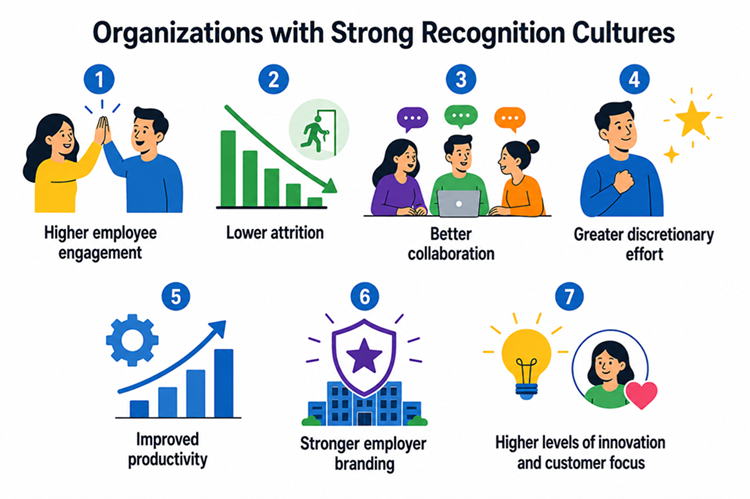
Organizations with strong recognition cultures consistently report:
1. Higher employee engagement
2. Lower attrition
3. Better collaboration
4. Greater discretionary effort
5. Improved productivity
6. Stronger employer branding
7. Higher levels of innovation and customer focus
Yet despite all the evidence, recognition remains underutilized in many workplaces. Programs often become transactional, infrequent, or disconnected from everyday employee experiences.
The organizations that truly succeed are the ones that make recognition visible, social, timely, and deeply embedded into how people work every day.
Employee recognition is often misunderstood.
Many organizations associate it only with annual awards, long-service milestones, or formal reward ceremonies. While these initiatives are valuable, true recognition goes much deeper.
Recognition is fundamentally about making people feel seen. It is the acknowledgment of effort, contribution, collaboration, learning, improvement, resilience, and behaviors that strengthen organizational culture.

At its core, recognition satisfies one of the most basic human psychological needs:
– The need to feel valued.
– When employees feel appreciated, they develop stronger emotional connections with their work, their managers, and their organizations.
– And over time, these moments accumulate into culture.
Culture is ultimately “how things are done around here.” That recognition helps transform organizational values from posters into lived experiences.
Modern workplace research consistently validates the connection between recognition and business outcomes.

Organizations where employees experience adequate recognition:
– Significantly higher engagement
– Lower burnout
– Stronger retention
– Higher productivity
– Greater emotional commitment
Gallup studies have repeatedly shown that employees who receive meaningful recognition are substantially more engaged than those who do not.
Research from SHRM suggests organizations with effective recognition strategies experience:
– Lower voluntary turnover
– Better employee morale
– Improved workplace relationships
– Stronger organizational commitment
Deloitte research finds that companies with strong recognition cultures are substantially more likely to achieve strong business outcomes than organizations with inconsistent or absent recognition.
Studies discussed in Harvard Business Review indicate that employees who feel valued demonstrate higher discretionary effort – the type of performance that cannot be mandated through policies or processes.
Recognition is one of the few organizational levers that genuinely strengthens commitment.
Culture is not built during annual town halls. It is built into everyday moments.
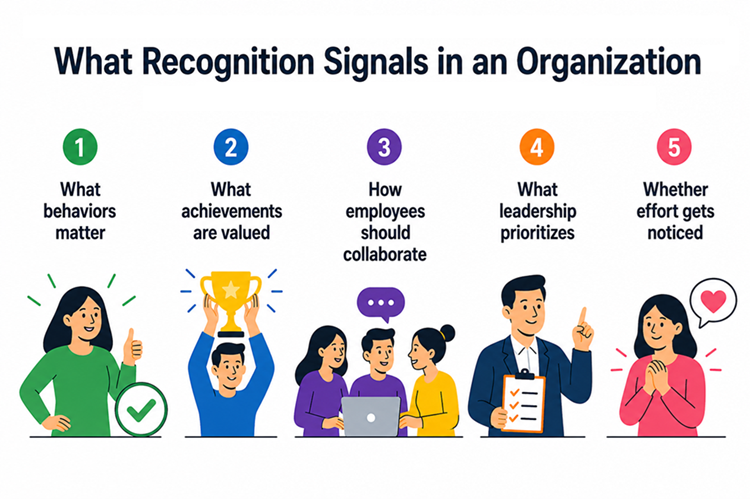
Every interaction inside an organization sends a signal about:
1. What behaviors matter
2. What achievements are valued
3. How employees should collaborate
4. What leadership prioritizes
5. Whether effort gets noticed
Recognition amplifies those signals.
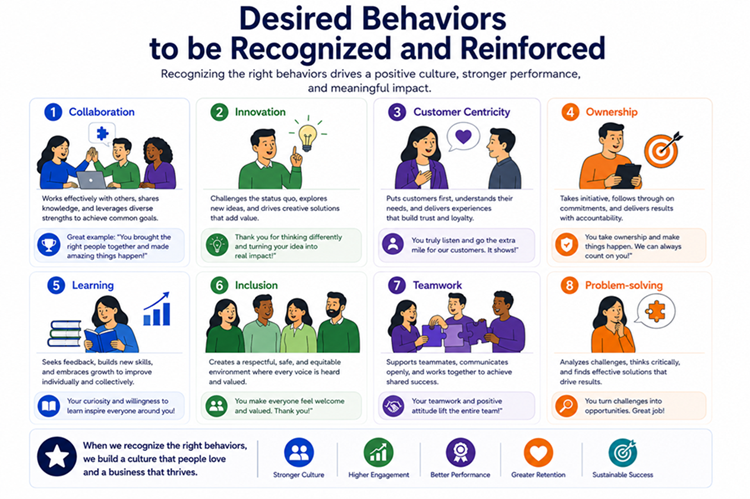
Employees repeat behaviors that receive appreciation. If organizations consistently recognize:
– Collaboration
– Innovation
– Customer centricity
– Ownership
– Learning
– Inclusion
– Teamwork
– Problem-solving
…employees begin associating those behaviors with success and belonging. Over time, repeated behaviors evolve into habits.
Habits evolve into culture. This behavioral reinforcement cycle emphasizes that acknowledged behaviors tend to recur and gradually shape organizational culture.

Recognition is not only strategic. It is deeply emotional.
1. Employees remember moments when their managers appreciated their extra effort.
2. They remember peers who acknowledged their support during difficult situations.
3. Remember leaders who publicly celebrated their contributions.
4. These moments create emotional safety and a sense of belonging.
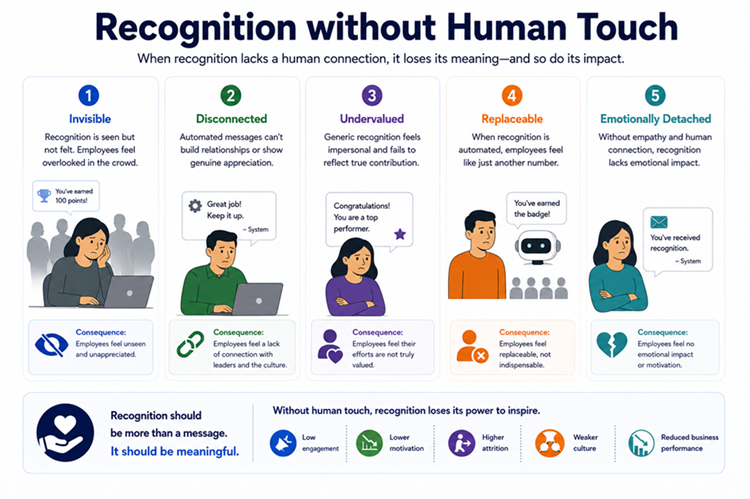
Without recognition, employees often begin to feel:
1. Invisible
2. Disconnected
3. Undervalued
4. Replaceable
5. Emotionally detached
This emotional disengagement becomes one of the earliest indicators of attrition risk.
Many employees do not leave organizations only because of compensation. They leave because they no longer feel valued.
Despite investing heavily in rewards programs, many organizations struggle to create meaningful impact. Why?
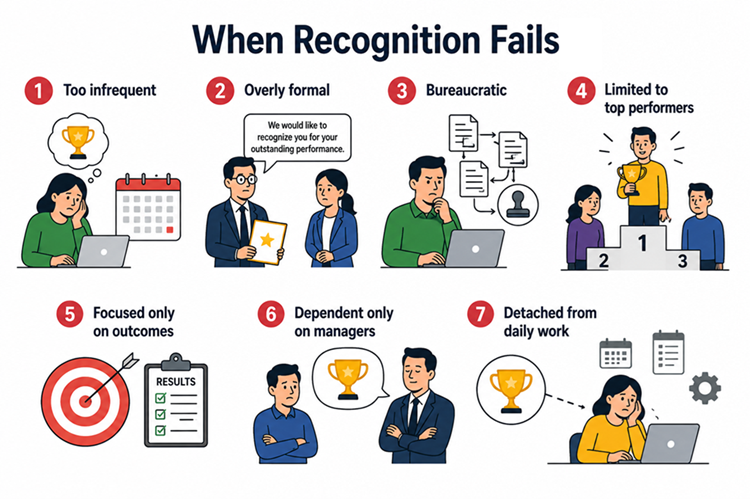
Because recognition often becomes:
1. Too infrequent
2. Overly formal
3. Bureaucratic
4. Limited to top performers
5. Focused only on outcomes
6. Dependent only on managers
7. Detached from daily work
Employees quickly recognize the difference between authentic appreciation and mechanical processes.
When recognition becomes performative rather than meaningful, it loses emotional impact.
Recognition cannot remain isolated within HR departments.
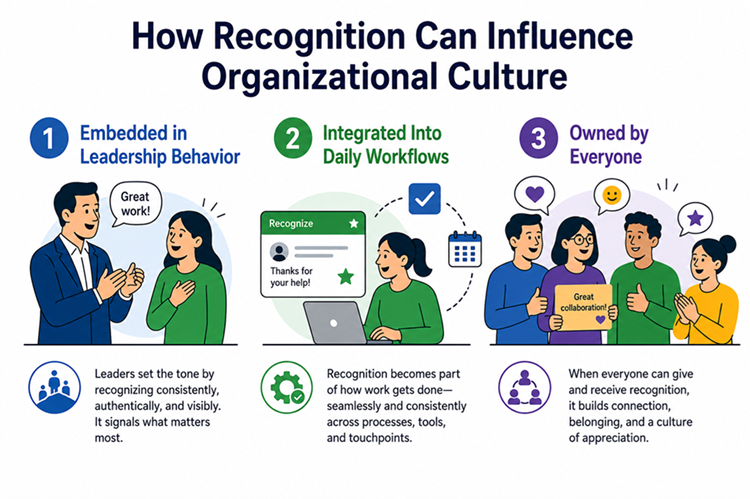
For recognition to influence culture meaningfully, it must become:
Leaders shape culture through what they consistently reinforce. When leaders visibly appreciate employees:
– Normalizes gratitude
– Encourages openness
– Builds trust
– Signals cultural priorities
Employees observe leadership behavior. Recognition from leaders creates cultural legitimacy.
Recognition should not wait for annual reviews or quarterly awards. High-performing cultures encourage appreciation during:
– Team meetings
– Project completions
– Collaboration moments
– Customer wins
– Innovation efforts
– Learning milestones
– Everyday contributions
Timely recognition has a significantly greater emotional impact than delayed acknowledgment.
Recognition becomes most powerful when it is democratized.
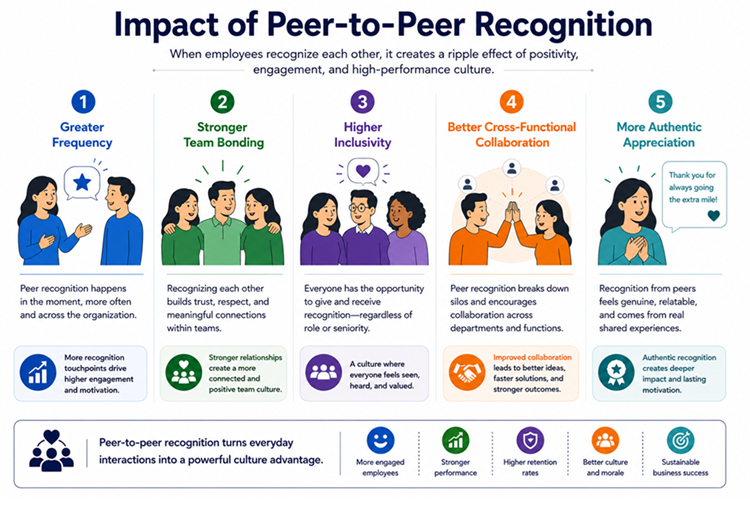
Peer-to-peer recognition creates:
1. Greater frequency
2. Stronger team bonding
3. Higher inclusivity
4. Better cross-functional collaboration
5. More authentic appreciation
Employees often value appreciation from peers because peers directly experience their day-to-day efforts.
Peer recognition increases the frequency of appreciation and strengthens organizational connections.
One of the biggest shifts in workplace recognition has been the rise of social recognition.
Recognition is no longer private. It is increasingly visible, collaborative, and community-driven.
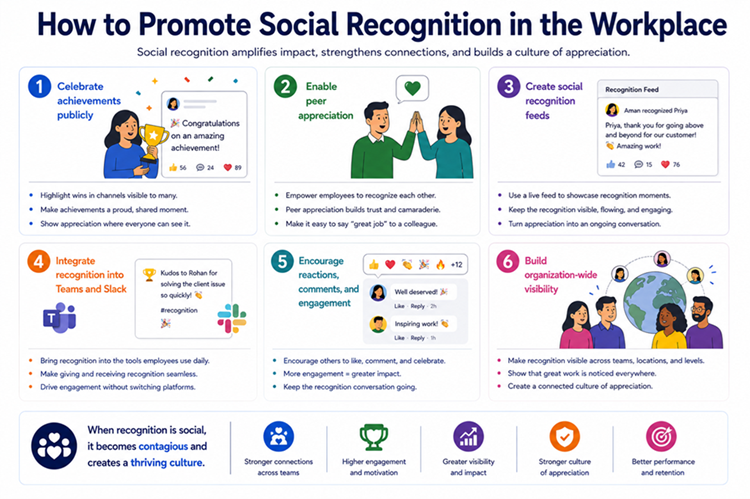
Modern digital recognition platforms, such as HiFives, allow organizations to drive social recognition:
1. Celebrate achievements publicly
2. Enable peer appreciation
3. Create social recognition feeds
4. Integrate recognition into Teams and Slack
5. Encourage reactions, comments, and engagement
6. Build organization-wide visibility
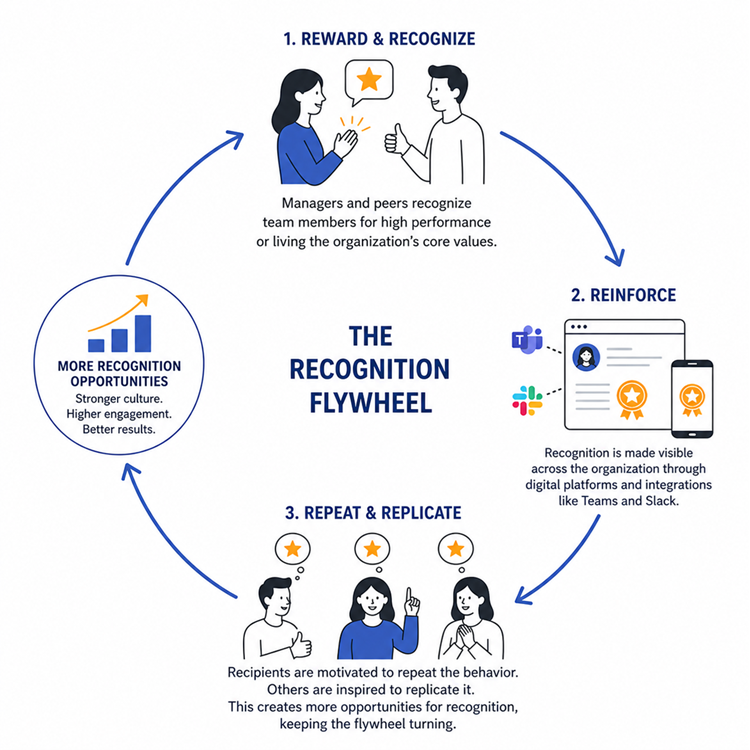
This visibility matters. Public recognition does two important things simultaneously:
– Motivates the recipient
– Inspires behavioral replication across the workforce
Employees observe what gets celebrated and align their behaviors accordingly. It creates a recognition flywheel effect.
Modern workplaces move fast. Delayed appreciation often loses emotional relevance.
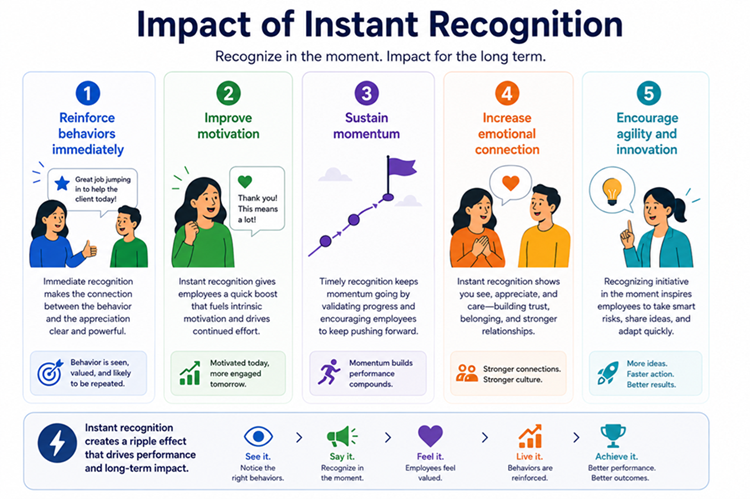
Instant recognition helps organizations:
1. Reinforce behaviors immediately
2. Improve motivation
3. Sustain momentum
4. Increase emotional connection
5. Encourage agility and innovation
Manager-led spot awards have become especially powerful because they allow immediate acknowledgment of meaningful contributions.
Research consistently suggests that immediacy increases the effectiveness of recognition. Employees connect recognition more strongly to the behavior when appreciation happens quickly.
Gamification has become an increasingly popular way to improve participation and engagement in recognition programs.
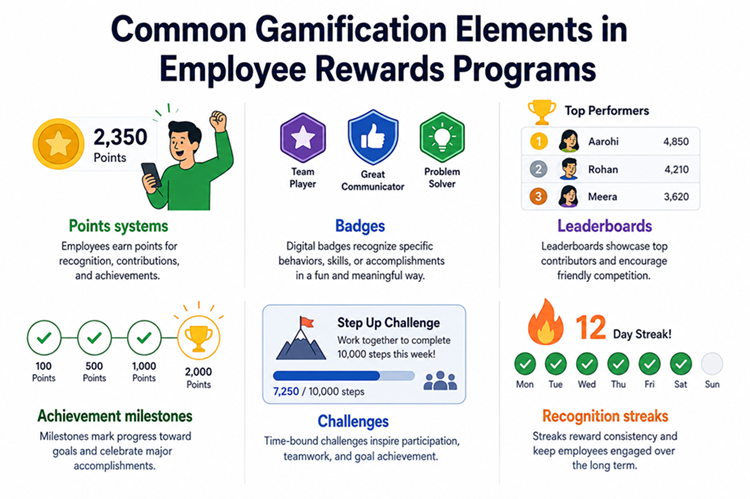
Common gamification elements include:
1. Points systems
2. Badges
3. Leaderboards
4. Achievement milestones
5. Challenges
6. Recognition streaks
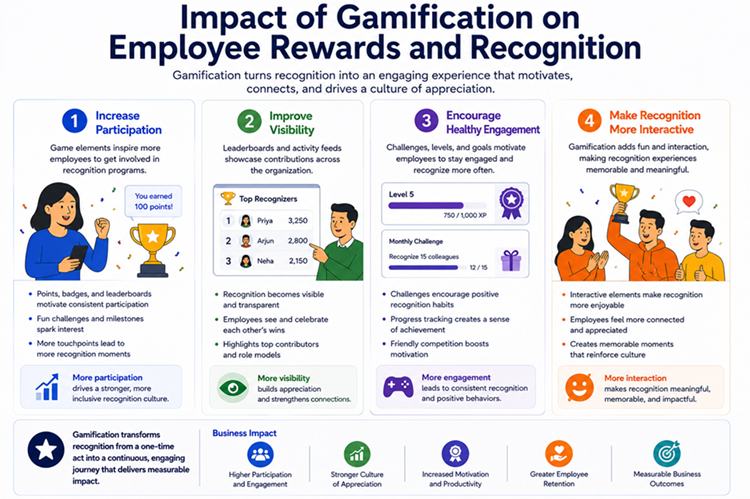
When designed thoughtfully, gamification can:
1. Increase participation
2. Improve visibility
3. Encourage healthy engagement
4. Make recognition more interactive
However, gamification should complement appreciation – not replace it. Recognition should remain authentic and emotionally meaningful.
As organizations become larger, more distributed, and increasingly hybrid, manual recognition becomes difficult to sustain consistently.
Digital employee recognition platforms, such as HiFives, help organizations scale their culture.
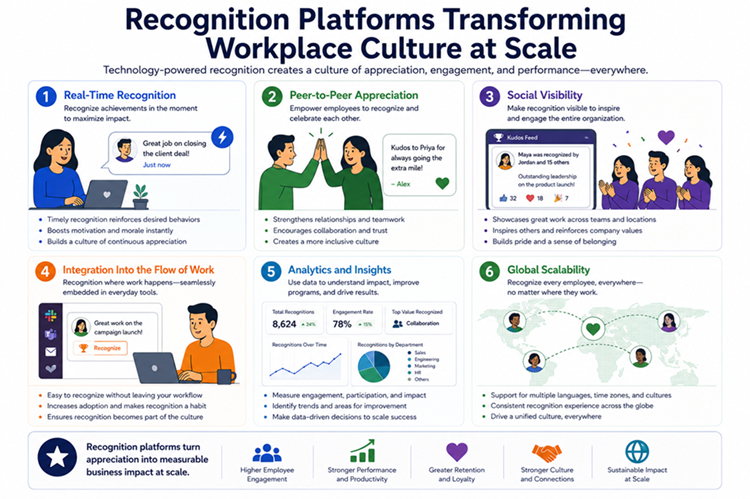
Modern R&R platforms like HiFives enable:
Peers and managers can recognize contributions instantly across locations and teams.
Recognition becomes more inclusive and collaborative.
Recognition becomes visible across the organization through feeds and integrations.
Recognition platforms such as HiFives, integrated with Microsoft Teams, Slack, and WhatsApp, improve adoption and convenience.
Organizations gain visibility into key metrics such as recognition frequency, manager participation, team engagement, cultural alignment, recognition coverage, and behavioral trends
Digital employee reward platforms like HiFives help organizations deliver consistent employee experiences across regions and geographies. They make recognition easier, more consistent, scalable, and trackable.
Recognition becomes even more critical in hybrid workplaces.
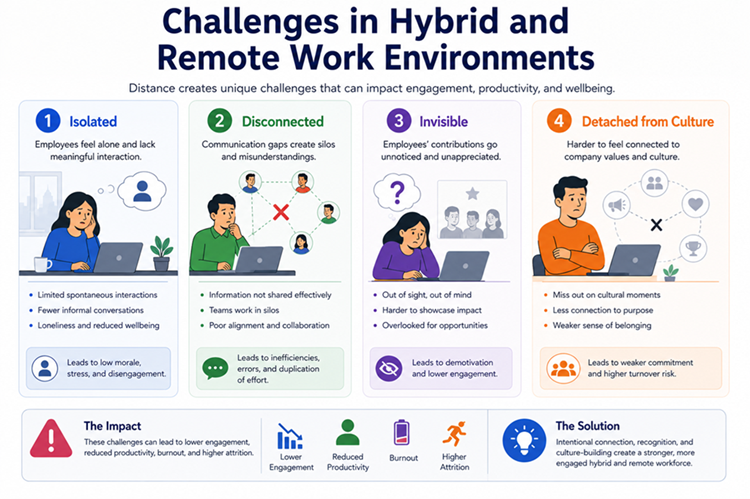
When employees work remotely or across distributed teams, they can quickly begin feeling:
1. Isolated
2. Disconnected
3. Invisible
4. Detached from culture
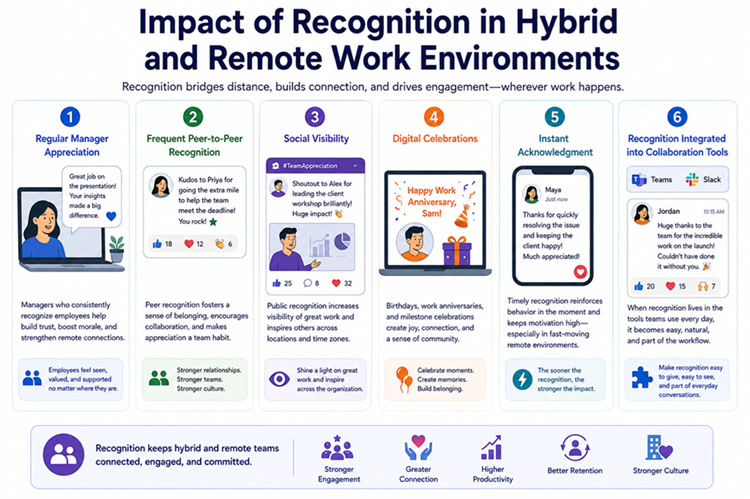
Digital recognition helps bridge these emotional gaps. Organizations that sustain strong cultures in hybrid environments typically prioritize:
1. Regular manager appreciation
2. Frequent Peer-to-peer recognition
3. Social visibility
4. Digital celebrations
5. Instant acknowledgment
6. Recognition integrated into collaboration tools
Recognition becomes one of the most effective ways to maintain human connection in distributed work environments.
Retention is no longer only about salaries. Employees increasingly stay where they feel appreciated, respected, and emotionally connected.
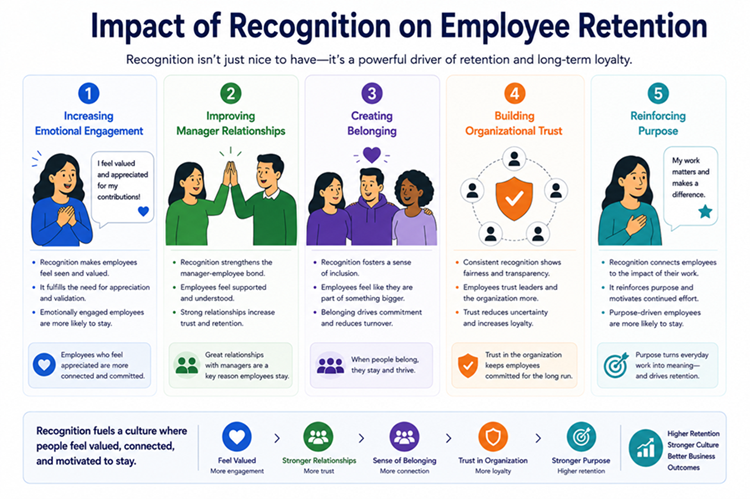
Recognition contributes directly to retention by:
1. Increasing emotional engagement
2. Improving manager relationships
3. Creating belonging
4. Building organizational trust
5. Reinforcing purpose
Employees who consistently feel ignored often disengage long before they quit. Recognition helps prevent this emotional withdrawal.
Organizations known for appreciation often develop stronger employer brands. Employees naturally become advocates when they feel valued.
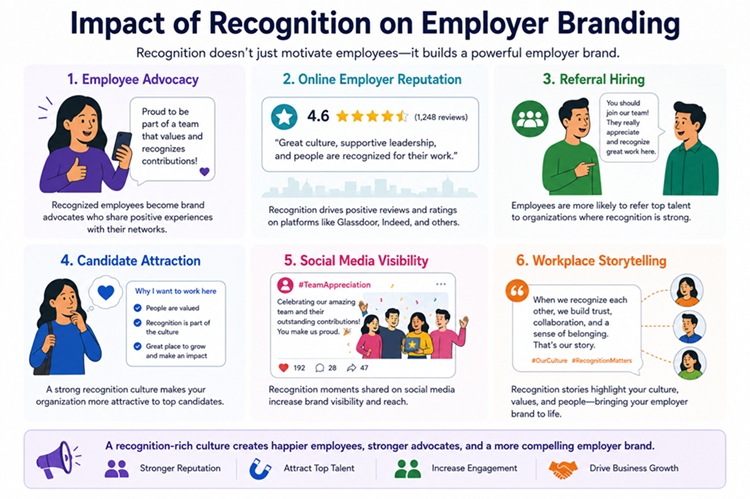
Recognition cultures improve:
1. Employee advocacy
2. Online employer reputation
3. Referral hiring
4. Candidate attraction
5. Social media visibility
6. Workplace storytelling
In competitive talent markets, cultural visibility becomes a major differentiator. Recognition helps make culture tangible.
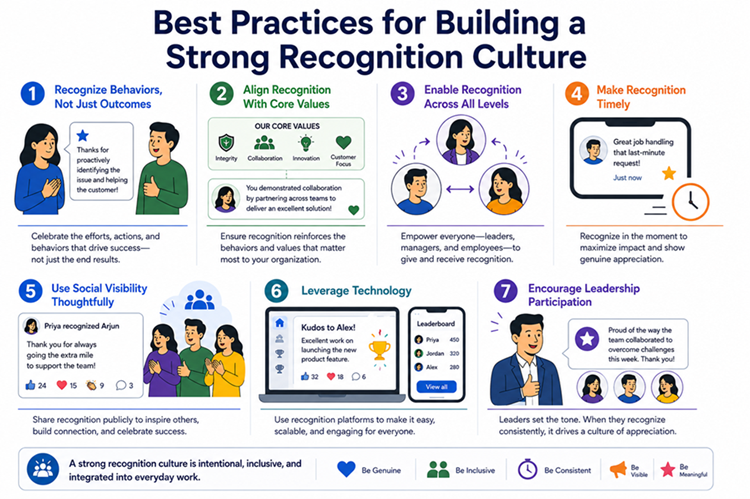
Focus on:
– Collaboration
– Effort
– Problem-solving
– Initiative
– Creativity
– Learning agility
– Team contribution
This creates healthier and more sustainable performance cultures.
– Recognition should reinforce organizational values consistently.
– When employees see values being celebrated regularly, values become actionable rather than symbolic.
– Recognition should not remain hierarchical.
– Empowering peers creates stronger inclusion and participation.
The closer the recognition of the behavior, the greater the impact.
Public appreciation amplifies impact and encourages cultural reinforcement.
Digital recognition platforms improve consistency, scalability, analytics, and adoption.
Recognition cultures succeed when leaders actively participate and model appreciation.
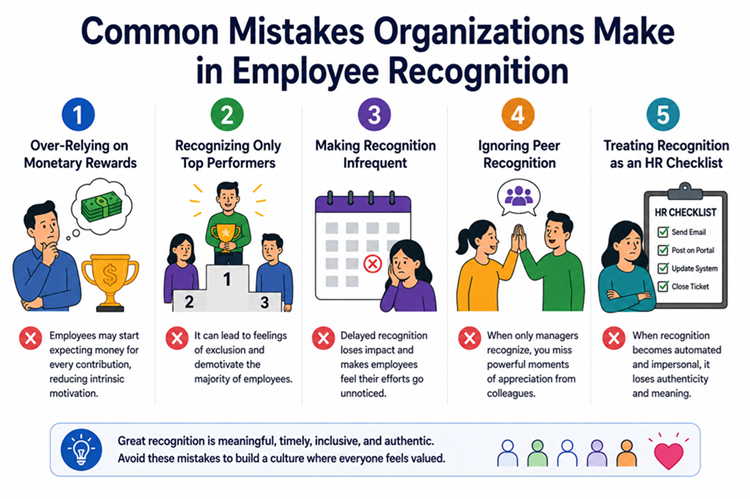
Money matters, but emotional appreciation often creates a longer-lasting impact.
Recognition should include everyday contributors, collaborators, and culture builders.
– Annual awards alone cannot sustain engagement.
– Recognition must become continuous.
Peer appreciation significantly increases cultural reach and authenticity.
Recognition loses its meaning when it becomes procedural rather than genuine.
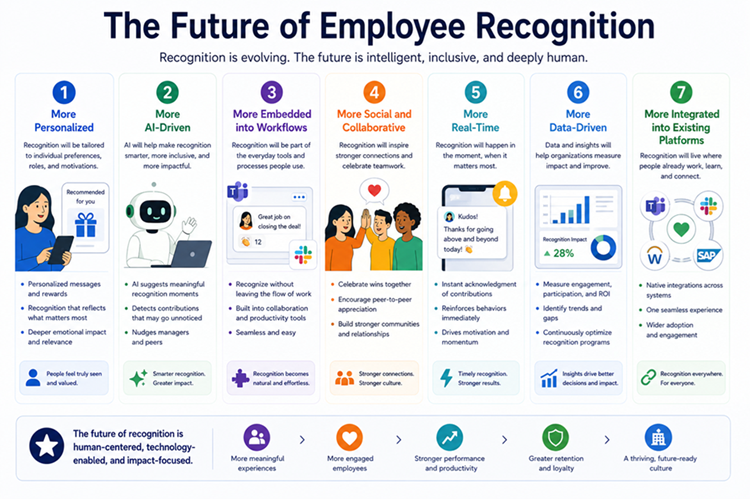
The future of workplace recognition will likely become:
1. More personalized
2. More AI-driven
3. More embedded into workflows
4. More social and collaborative
5. More real-time
6. More data-driven
7. More integrated into existing platforms
Organizations are increasingly recognizing that employee experience cannot be separated from recognition culture. Recognition is becoming one of the core operating systems of modern organizational culture.
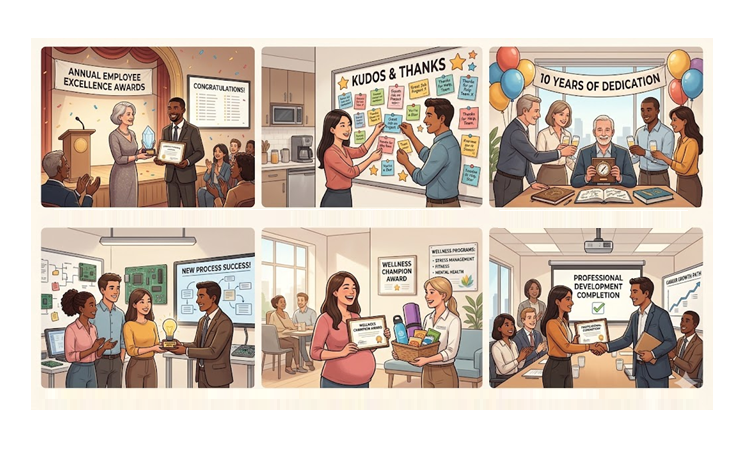
Employee recognition is the acknowledgment and appreciation of employees’ efforts, behaviors, achievements, and contributions, reinforcing positive workplace culture and engagement.
Recognition improves employee engagement, retention, morale, productivity, collaboration, and emotional connection with the organization.
Recognition reinforces desired behaviors repeatedly. Over time, these repeated behaviors evolve into habits that shape workplace culture.
Peer-to-peer recognition allows employees to directly appreciate and acknowledge one another, improving collaboration, inclusivity, and team bonding.
Immediate recognition creates a stronger emotional impact and reinforces behaviors more effectively than delayed appreciation.
Digital platforms enable instant recognition, peer appreciation, social visibility, gamification, analytics, workflow integrations, and scalability across distributed teams.
Leaders establish cultural norms. When leaders consistently recognize employees, it encourages organization-wide appreciation and trust.
Yes. Employees who feel valued and appreciated are significantly more likely to remain emotionally engaged and committed to their organizations.
The most effective practices include:
– Frequent recognition
– Peer-to-peer appreciation
– Timely acknowledgment
– Alignment with core values
– Public visibility
– Leadership participation
– Digital enablement
Absolutely. Recognition helps maintain emotional connection, visibility, and a sense of belonging in remote and hybrid work environments.
Employee recognition may appear simple on the surface.
– Thank-you note.
– Quick appreciation message.
– Public acknowledgment during a meeting.
– Peer nomination.
– Manager-led spot award.
Individually, these moments may seem small. Collectively, they shape culture.
Organizations do not build strong cultures through posters, presentations, or slogans alone. They build them through repeated moments of appreciation, visibility, trust, and human connection.
Recognition ensures those moments do not go unnoticed. And when employees consistently feel seen, valued, and appreciated, organizations become like communities people genuinely want to contribute to, grow within, and stay connected with.

Lead author: Sagar Chaudhuri, the Co-Founder and CEO of HiFives. He is an HR Tech Evangelist with over 25 years of experience in both corporate and entrepreneurial settings. Previously, Sagar has held leadership roles with companies such as Genpact, Infosys, and ICICI Bank. He has an engineering degree from IIT Kharagpur and an MBA from IIM Lucknow. Connect on LinkedIn
To stay updated on the latest HiFives blogs, follow us on Twitter (@MyHiFives)