


Empower recognition through leadership – how top-management commitment transforms employee rewards into strategic culture and business growth.
1. Top management plays a crucial role in the success of employee rewards and recognition programs by ensuring they align with the organization’s goals and values.
2. Their involvement enhances the program’s credibility, builds employee trust, and makes recognition aspirational, motivating employees to perform better.
3. By defining program goals, approving budgets, and participating in the recognition process, top management increases employee engagement and the program’s overall impact.
4. Their active Participation also boosts visibility and inspires higher involvement among employees and managers.
Top management in all organizations defines the vision, business strategies, and organizational policies, and guides the team in implementing them. Hence, given the importance of employee recognition in motivating the workforce, the organization’s top management must be actively involved in this process.
HR experts believe that the active involvement of the top management in employee recognition programs is essential for ensuring their success.
So, this is how their involvement can make an impact on the effectiveness of the program:
1. Makes It More Integrated
2. Builds Credibility
3. Creates Trust
4. Makes It Aspirational
5. Enhances Participation
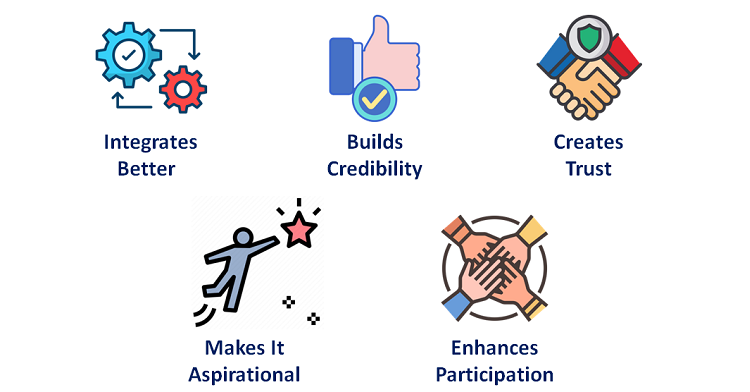

The involvement of top management in the employee recognition program helps it align more closely with the organization’s business goals and core values.
Hence, this can help the organization achieve a greater business impact from the program.

The visible involvement of top management in the program enhances its importance to employees.
They start perceiving it as more strategic, not just another HR initiative.

The involvement of top management helps reassure employees that the organization is genuinely interested in recognizing their efforts and contributions.
Therefore, they view the program as a genuine initiative by the organization to appreciate those who have contributed the most to its growth and success.

Also, the active involvement of the organization’s top leaders in the employee recognition program makes it aspirational for employees.
It motivates them to outperform even further in their roles and increases their chances of being recognized and noticed by top management.

Given the program’s visibility to top management and their involvement, more employees are motivated to work harder and perform better to receive recognition.
Also, supervisors and managers are keen to nominate their team members for recognition for the same reason.
It helps enhance the program’s overall impact.
The top management should play a critical role in making the key decisions about the employee recognition program.
So, here are the critical aspects of the program where they make a significant impact:
1. Defining Program Goals
2. Funding For The Program
3. Approval For The Program Design
3. Approval For The Program Design
5. Employee Communication
6. Felicitation Of Award Winners
7. Direct Recognition By Management
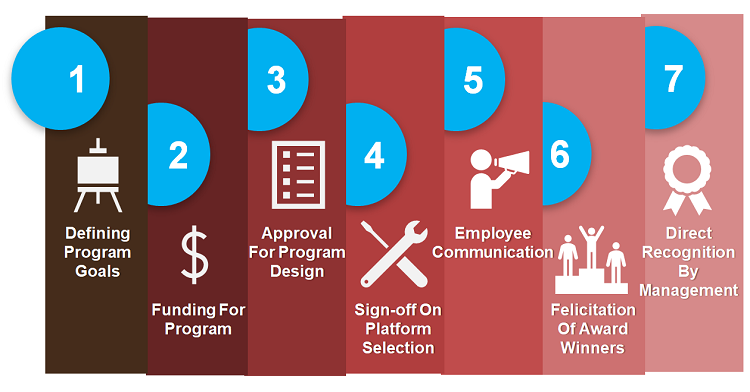

One important responsibility of the top management is to outline the key objectives of the recognition program.
Understanding what the organization intends to achieve through the employee rewards and recognition program is critical to ensuring its success.
It also makes it easier for management to track and measure the program’s impact, allowing them to make informed decisions to improve its effectiveness.
Another important responsibility of top management regarding recognition programs is approving the budgets for the same.
It may be due to factors such as program goals, expected return on investment, and overall financial situation.
Primarily, a clear understanding of the expected ROI might drive the budget allocation to the program.

In most organizations, the top management has the final say in defining the program design.
The program’s goals and framework must align with the organization’s business objectives and core values.
Top management would typically finalize the recognition program, policies, and the process framework.

More often than not, selecting the right technology platform for employee recognition is one of the most critical decisions in setting up the program.
There are various factors that the organization needs to consider when deciding on a platform.
Hence, the top management should give the final sign-off on the decision to go ahead with a particular recognition platform.

Also, there should be involvement of the top management in important communication and updates about the employee recognition program.
Communication about the program launch and the announcement of significant awards are great ways to generate visibility around the program.
Emails, appreciation letters, personally signed certificates, and even video messages from the top management to the award winners are great ideas.

Another great way of ensuring the involvement of the top management in the recognition programs is by making them give away awards during an awards ceremony or town hall.
Receiving rewards from a high-level executive fills the employees with a sense of pride and achievement.
Informal interactions with top leaders, such as over coffee or a meal, or during a photo session, are also great ways to motivate further and inspire them.

Another effective way to ensure the involvement of the top management in reward programs is through management awards.
Although the nominations may come from different managers within the organization, the top leaders can personally make the final decision based on the available data.
Management can award the winners at an awards ceremony attended by a large gathering of employees across the organization. Such employees perceive these awards as highly valuable.

Top management involvement gives the program credibility, ensures alignment with business goals, and signals to employees that recognition is a strategic priority.
It helps build trust, make recognition aspirational, enhance participation, and encourage managers and employees to engage more.
The top management can:
1. Define program goals and metrics
2. Approve funding and budgets
3. Sign off on program design and platform selection
4. Participate in communications
5. Personally felicitate the winners
6. Offer direct recognition themselves
It ensures the recognition program has the necessary resources and is aligned with organizational values and strategies, making it sustainable and impactful.
When top leaders recognize an employee directly—especially in public settings—it increases the emotional value of the award and reinforces that performance is noticed at the highest levels.
The involvement of the top management in employee recognition is one of the critical success factors of the program. Their involvement can lend significant credibility and visibility to the program, and increase its efficacy significantly.

Lead author: Sagar Chaudhuri, the Co-Founder and CEO of HiFives. He is an HR Tech Evangelist with over 25 years of experience in both corporate and entrepreneurial settings. Previously, Sagar has held leadership roles with companies such as Genpact, Infosys, and ICICI Bank. He has an engineering degree from IIT Kharagpur and an MBA from IIM Lucknow. Connect on LinkedIn
To stay updated on the latest HiFives blogs, follow us on Twitter (@MyHiFives)
Learn more about HR Best Practices on HiFives.