


Developing effective policies to recognize millennials can help organizations motivate them and enhance their performance.
1. Millennials are tech-savvy, value instant gratification, and require clear recognition criteria and on-the-spot recognition.
2. Hence, it is essential to have tailored recognition programs for millennials in the workplace.
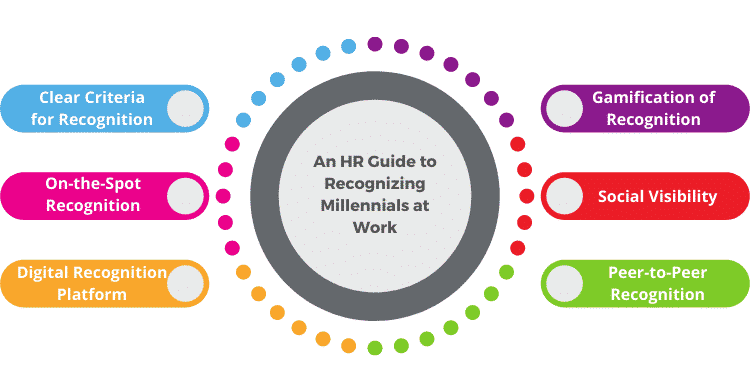
3. Effective strategies include using digital platforms, gamification, social visibility, and peer-to-peer recognition.
4. Implementing these strategies can enhance their performance and contribute to organizational success.
Organizations often find it challenging to keep millennials engaged and motivated. Hence, when recognizing millennials at work, they need to implement policies and systems that cater to their needs, which differ significantly from those of employees from earlier generations.
| Key Strategies | Best Practices | Business Impact |
|---|---|---|
| Define Clear Recognition Criteria | Link recognition to specific behaviors, goals, and company values; ensure transparency in who gets recognized and why | Builds purpose-driven engagement and aligns employees with organizational goals |
| Enable On-the-Spot Recognition | Implement real-time spot awards and instant feedback mechanisms through managers and peers | Reinforces desired behaviors quickly and boosts motivation through instant gratification |
| Leverage Digital Recognition Platforms | Use mobile-first, app-based, or integrated platforms for seamless and accessible recognition | Improves adoption, scalability, and engagement among the tech-savvy millennial workforce |
| Gamify the Recognition Experience | Introduce points, badges, leaderboards, and challenges to create a fun and competitive environment | Increases participation, engagement, and sustained interest in recognition programs |
| Ensure Social Visibility of Recognition | Publish recognition on social feeds, internal platforms, or collaboration tools for wider visibility | Enhances motivation, builds aspiration, and strengthens workplace culture |
| Promote Peer-to-Peer Recognition | Enable employees to recognize colleagues across teams and levels through simple digital workflows | Drives collaboration, inclusivity, and stronger team relationships |
| Provide Frequent & Continuous Feedback | Encourage ongoing recognition and feedback instead of limiting it to periodic or annual events | Improves engagement, retention, and performance through consistent reinforcement |
| Align Recognition with Purpose & Meaning | Connect recognition to organizational mission, impact, and employee contribution to larger goals | Increases job satisfaction, loyalty, and emotional connection with the organization |
| Offer Growth-Oriented Recognition | Recognize learning, skill development, and innovation; provide career growth opportunities as rewards | Enhances retention, capability building, and long-term employee development (HR Service, Inc.) |
| Ensure Transparency & Inclusivity | Make recognition processes open, fair, and accessible across teams and hierarchies | Builds trust, increases participation, and creates a positive work environment (Reward Gateway) |
Millennials already comprise a significant percentage of the global workforce and this number is expected to grow to around 75% by the year 2025.
In general, professionals belonging to this generation tend to be more confident, digitally savvy, clear-headed, expressive, and adaptable than their predecessors.

The one thing that makes millennials unique is that they were born and raised during a time of significant technological advances, as the digital era was beginning.
This makes them highly tech-savvy and innovative.

Most millennials are also known to be extremely competitive and have a strong desire to excel in everything they do.
They also tend to be motivated by things that employees belonging to previous generations would not consider necessary.
These may include a better work-life balance, a more flexible work environment, and digital technology.
For developing an effective employee recognition program for millennials, organizations need to consider the various factors that may impact their engagement, efficiency, and happiness.
Here are a few practical tips that can help organizations in this context:
1. Clear Criteria for Recognition
2. On-the-Spot Recognition
3. Digital Recognition Platform
4. Gamification of Recognition
5. Social Visibility
6. Peer-to-Peer Recognition

Millennials feel highly motivated by the clarity of purpose and the meaning of their jobs.
They need to feel connected to the organization’s mission and values.
Recognition policies with well-defined criteria that help them link the rewards to their contribution towards achieving the business objectives prove most effective for them.

Born and raised in a culture that values instant gratification, millennials are most motivated by instant recognition from their supervisors and managers.
Hence on-the-spot recognition or spot awards should be part of the rewards and recognition programs targeted towards them.

The use of digital technology and mobile devices is integral to the lives of millennials.
Hence, the use of digital employee recognition is an absolute must to maximize the effectiveness of such programs.

A positive, fun work environment is one of the key motivators for millennials.
Hence, organizations should include various aspects of gamification such as reward points, e-gift cards, digital leaderboards, contests, and challenges, etc. in their employee recognition programs.

Most millennials spend considerable time on social media platforms for personal and professional reasons.
Thus integration with social media such as LinkedIn and Facebookshould be essential to any recognition program aimed at millennials.

Millennials consider being appreciated by their coworkers important.
So, promoting peer-to-peer recognition should be integral to recognition programs targeted towards them.
Read: How To Recognize And Motivate Gen Z Employees?

The most effective methods include:
– Clear and meaningful criteria that connect recognition to the organization’s mission and values.
– On-the-spot recognition, catering to their preference for immediate feedback.
– Digital platforms are used by most millennials, who engage heavily with technology.
– Gamification, adding fun, competitive elements to recognition.
– Social visibility, allowing recognition to be public and shareable.
– Peer-to-peer acknowledgment encourages recognition within teams.
Clear criteria help link individual contributions to broader business objectives, giving millennials a stronger sense of purpose and connection to organizational goals.
Millennials, accustomed to instant feedback and gratification, are most motivated when recognition is delivered right away through spot awards or timely praise.
As digital natives, millennials respond best to technology-enabled recognition via apps, web platforms, or mobile tools—making the process intuitive, accessible, and engaging.
Gamified elements like points, badges, and leaderboards add a layer of fun and competitiveness, while social visibility allows recognition to be shared and celebrated publicly among peers.
Peer-to-peer recognition fosters a culture of appreciation and collaboration, empowering employees to celebrate each other, which is highly valued by millennials.
Developing effective policies for recognizing millennials can help organizations motivate them effectively, enhance their overall performance, and help drive business success.

Lead author: Sagar Chaudhuri, the Co-Founder and CEO of HiFives. He is an HR Tech Evangelist with over 25 years of corporate and entrepreneurship experience. In the past, Sagar has held leadership roles at companies such as Genpact, Infosys, and ICICI Bank. He has an engineering degree from IIT Kharagpur and an MBA from IIM Lucknow. Connect on LinkedIn
To stay updated on the latest HiFives blogs, follow us on Twitter (@MyHiFives)